Cars, campers and caravans on the Aarhus–Odden ferry
One fare covers the car and up to nine people. Everything else on this page is about height, length and where the crew will put you.
Checked:
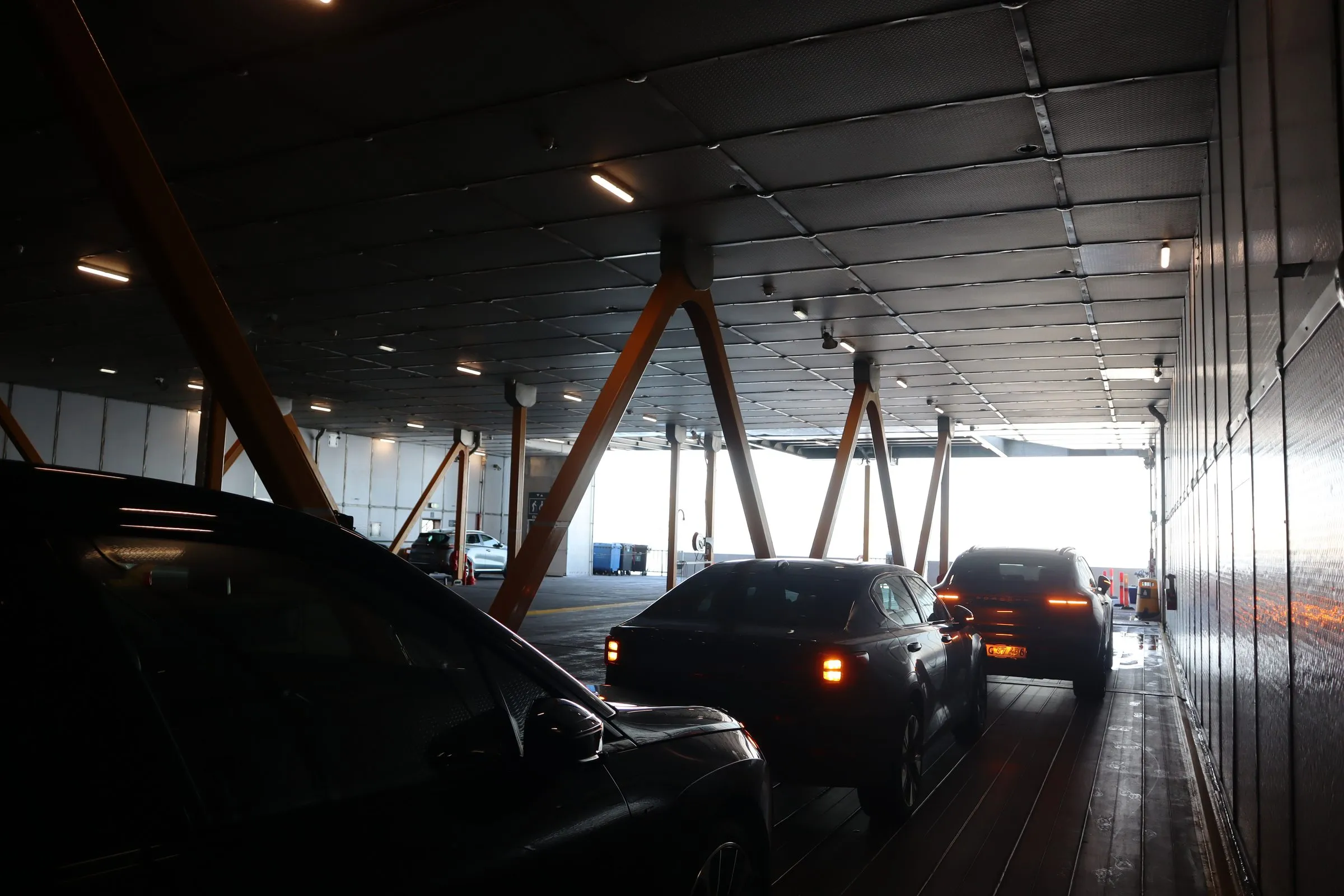
The crossing at a glance
- Car fare up to
- 1.85 m
- Above that you book a taller category
- Tallest you can book
- 4.00 m
- Tall van, campervan, bus or lorry
- Fare covers
- up to 9 people
- One price for the whole vehicle
- Trailer from
- DKK 449
- Up to 3.0 m, on top of the vehicle fare
Height decides your fare
Molslinjen prices vehicles by height, and the category you fall into decides what you pay. These are the categories in the booking flow, with the maximum for each:
| Category | Max height | Max length | Max weight |
|---|---|---|---|
| Car | 1.85 m | 6.00 m | 3.5 t |
| Tall car | 2.10 m | 6.00 m | 3.5 t |
| Van | 2.95 m | 6.00 m | 3.5 t |
| Tall van or campervan | 4.00 m | 8.00 m | 3.5 t |
| Bus or motorhome | 4.00 m | 8.00, 12.00 or 14.00 m | 40 t |
The first line is the one that catches people out. The DKK 249 Lowprice fare is for cars up to 1.85 m, and a roof box, a roof-mounted bicycle rack or a set of surfboards lifts an ordinary estate past it.
Bicycles on the car are handled as paid extras rather than a change of category. Molslinjen sells Extra height for a bicycle on the roof and Extra length for a rack or cargo carrier on the back. You add either when you book, or afterwards by changing the ticket on their site. Do it before you arrive: it is cheaper than sorting it out in the lane.
Measure from the ground to the highest point, including whatever is strapped to the roof. The tallest category you can book is 4.00 m.
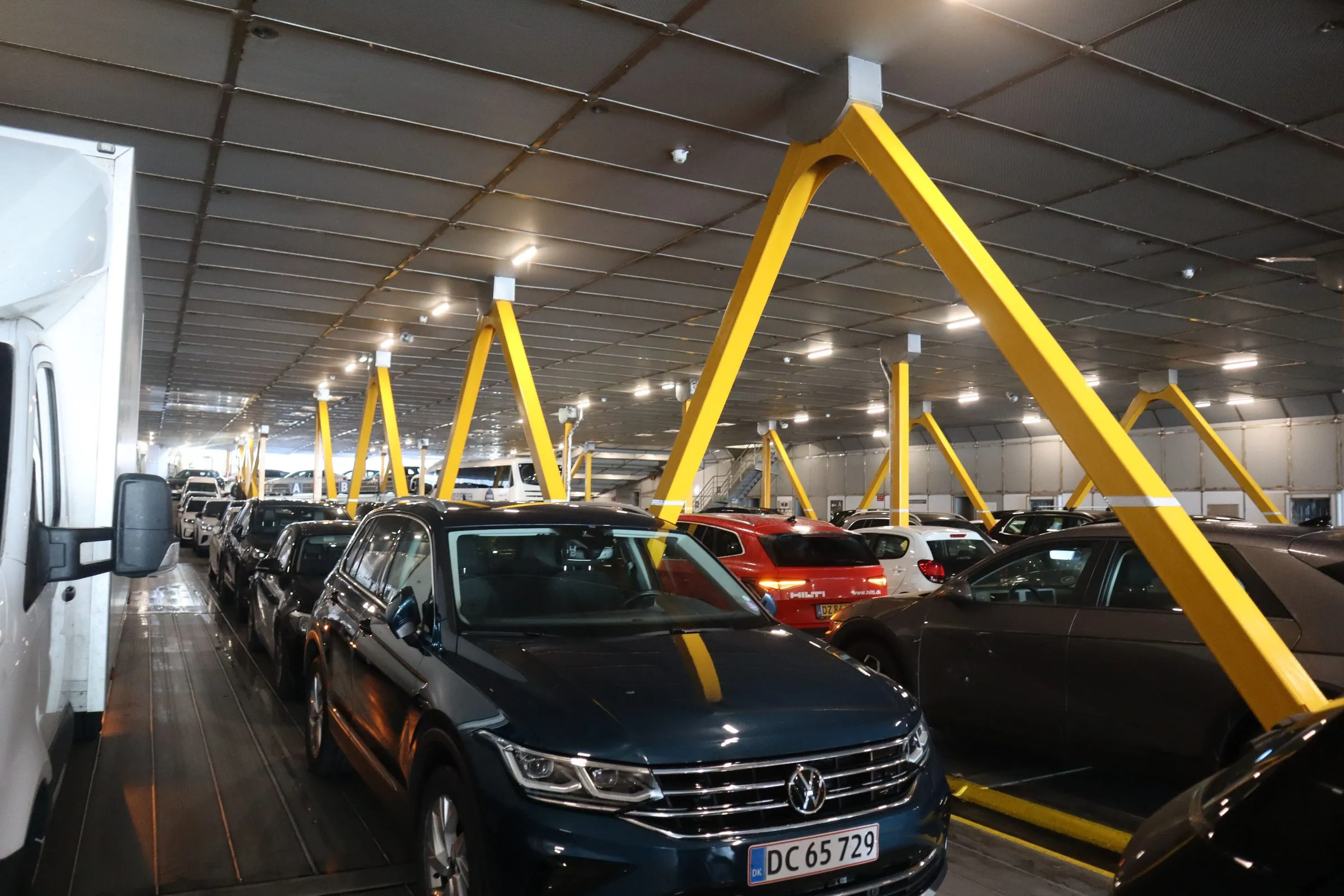
What the fare covers
One figure decides the whole comparison, and it is the one most often got wrong elsewhere: you pay per vehicle, and up to nine people can travel in it.
That makes the arithmetic completely different depending on how many of you there are. At DKK 249 in Lowprice the cost per person falls sharply the fuller the car is. A family in a full car should therefore compare against the Great Belt Bridge rather than against a train ticket; a solo driver often the other way round. See ferry or bridge.
Trailers and caravans
Trailers and caravans are charged separately, by length, on top of the vehicle fare:
| Trailer | Maximum height | Price |
|---|---|---|
| Up to 3.0 m long | 1.85 m | DKK 449 |
| Up to 5.0 m long | 1.85 m | DKK 549 |
| Up to 8.0 m long | 2.95 m | DKK 649 |
| Up to 10.0 m long | 4.00 m | DKK 749 |
A car plus a 5.0 m caravan on a Lowprice fare comes to about DKK 798. The Great Belt toll for a car with a caravan is charged at a higher rate than the DKK 205 for a car alone, so check the current rate for your combination before comparing. On ticket price the bridge is still the cheaper of the two.
Work the ferry out anyway, because the two journeys are not comparable. Towing a caravan 302 km along the E20 is a different day from towing it 114 km, and consumption with a caravan behind the car runs above the 6.5 litres per 100 km our standard calculation uses.
Electric cars
Charging on board is not open to everyone. It comes with a BlueClass ticket, it is free, and you have to book it in advance. On any other fare, the charging points on the car deck are not yours to use.
What is open to everyone is charging in the port. Molslinjen points to superchargers in Aarhus, paid by card, with Odden to follow, and to CLEVER fast-charge stations in both port areas, which need a CLEVER charge card. Plan your charge around the harbour rather than the crossing.
For the ferry or bridge calculation this matters: an electric car removes most of the fuel saving that makes the ferry competitive. If you are driving electric, the money argument shifts firmly towards the bridge. The case for the ferry then rests on the 90 min and on your destination.
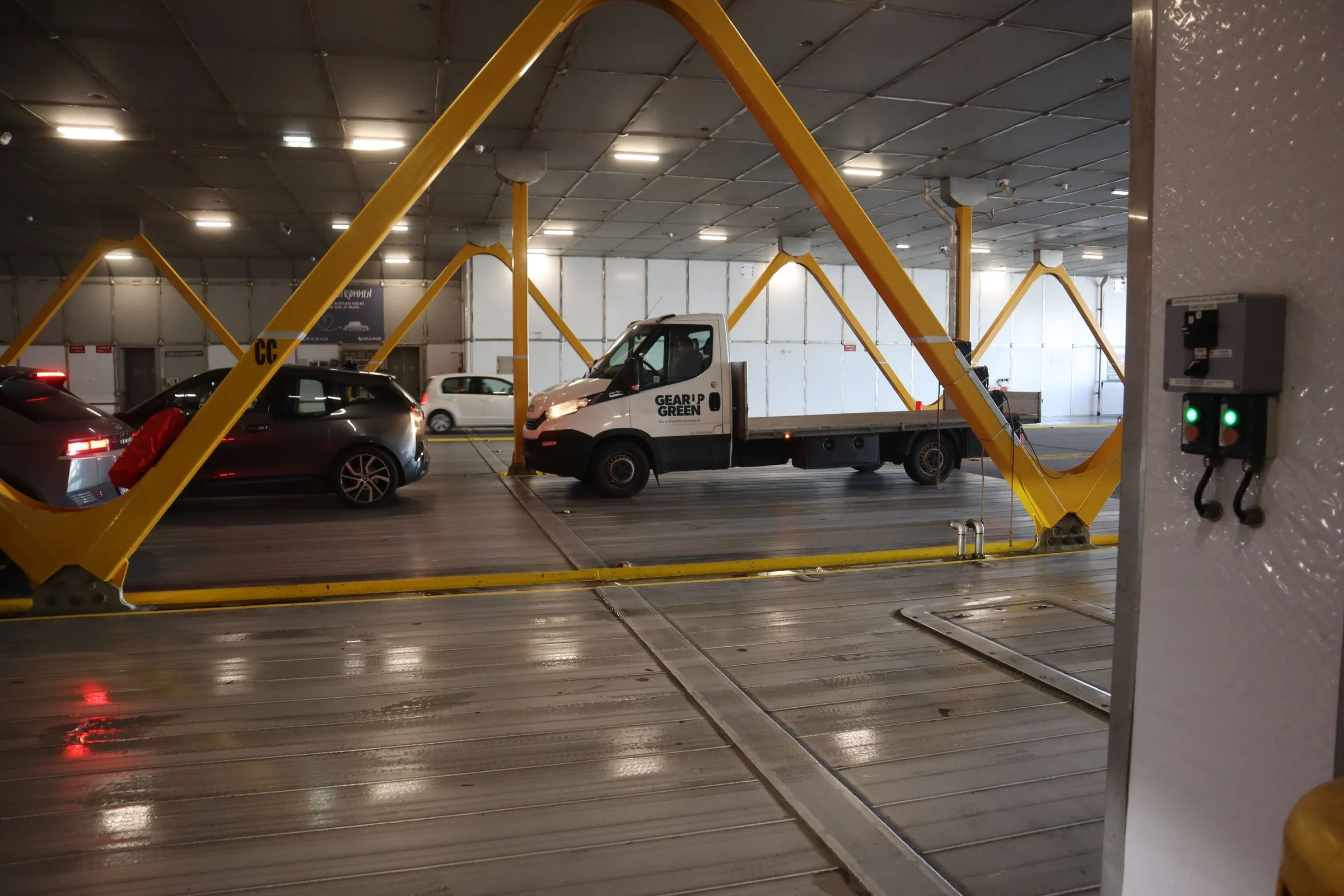
Loading and unloading
Camper or caravan
From ramp to road
A camper or a car with a trailer, from the marshalling lanes to the road at the other end.
- T-40
Arrive early and get in the right lane
Height and length are what the marshaller is looking at. Arriving before the rush means you are given a place rather than fitted in.
- T-20
Onto the lower deck
Taller vehicles are sent to the lower deck, which takes everything up to the 4.00 m Molslinjen will book. Anything road legal in Denmark.
- T-10
Parked and secured
Follow the marshaller exactly. On a catamaran the vehicle decks are wide and the spacing is tighter than it looks.
- 0:00
Leave the vehicle
Nobody stays on the car deck under way. Take what you need for 90 min, including a charger if you want one.
- 1:25
Back down before the ramp
Go down when the announcement comes, not before. The decks are cleared in order, and anyone standing about early holds everyone up.
- 1:35
Off, and out
The crew decides the order in which the decks are emptied. Route 21 at Odden, or the harbour road at Aarhus.
Motorcycles
The published rates cover cars and larger vehicles with their trailers. A motorcycle is neither a car nor a foot passenger, so its fare appears in the booking flow rather than in the printed table.
That matters less here than on most routes, because motorcyclists can buy at the control point on the day and pay by card, without a booking. Two-wheelers are handled separately from the cars at check-in.
On the car deck, ask the crew where to put the bike and how they want it secured. They marshal the deck and know what the crossing does to anything standing on two wheels. See by bike for how the same lane works for cyclists.
Questions people ask
How high can a vehicle be on the Aarhus to Odden ferry?
Molslinjen books by height category: Car up to 1.85 m, Tall car up to 2.10 m, Van up to 2.95 m, and tall vans, campervans and buses up to 4.00 m. The DKK 249 fare applies to the first of those, so measure your car with the roof box or bike rack fitted.
What does a caravan or trailer cost?
On top of the vehicle fare: DKK 449 up to 3.0 m long, DKK 549 up to 5.0 m, DKK 649 up to 8.0 m and DKK 749 up to 10.0 m.
Is the ticket per person or per vehicle?
Per vehicle, including up to nine people. A driver alone and a full car pay the same fare.
Can I charge an electric car on board?
On board, only with a BlueClass ticket, free but booked in advance. Otherwise you charge in the port: superchargers in Aarhus paid by card, Odden to follow, plus CLEVER fast chargers in both port areas that need a CLEVER card.
Do I need to be there earlier with a camper?
The published deadline is the same, but the loading is not. Larger vehicles are marshalled deliberately and boarded in a set order, so arriving on the deadline with a caravan is asking for trouble.