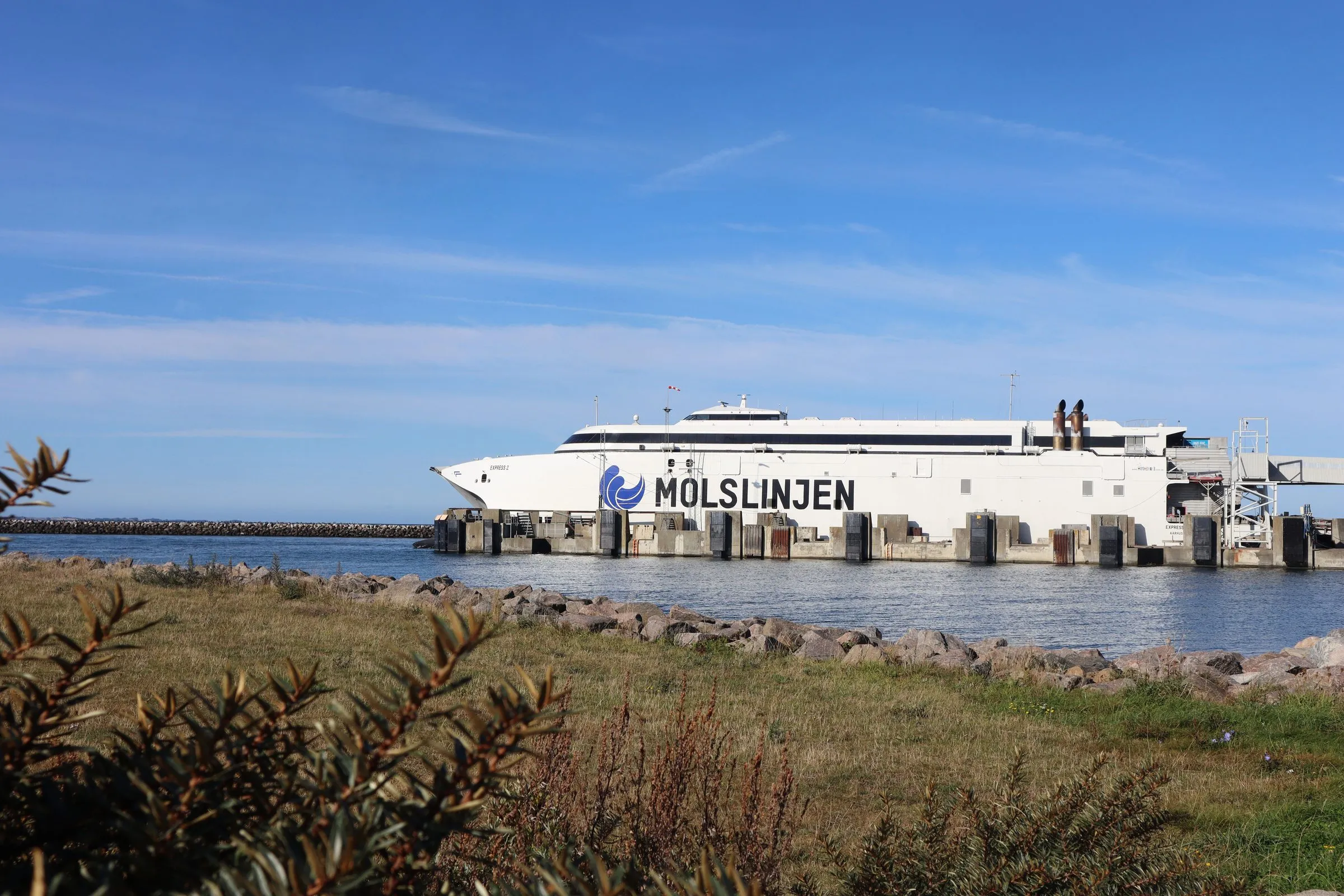
Jutland to Zealand across the Kattegat
Aarhus to Odden ferry
Three high-speed catamarans cross the Kattegat, roughly every 60 to 90 min, all year round. Here is what the crossing involves, and when driving instead makes more sense.
You book through our partner. We may receive a fee for this, at no extra cost to you.
- Crossing
- 90 min
- 1 hr 30 min on every sailing in the timetable
- Departures
- every 60 to 90 min
- 8 to 11 each way, depending on the season
- Car and up to 9 people
- from DKK 249
- Lowprice fare, 2026
- The bridge instead
- DKK 205
- Great Belt Bridge, with bizz or number plate
The crossing time
The crossing takes 90 min. Molslinjen’s own timetable lists every sailing as 1 hr 30 min, and the departure and arrival times match: 05:15 arrives 06:45, 18:30 arrives 20:00. A route description elsewhere on their site says 80 min, but the timetable you book from does not.
We crossed and timed it at 90 min as well. Plan for that.
Ferry or bridge to Copenhagen?
Most people looking at this route are asking a broader question: what is the quickest way from Jutland to Zealand? Molslinjen answers with “save 200 kilometres”, which is a claim about distance and not about time.
The two routes side by side
Aarhus city centre to central Copenhagen, one car, up to nine people, free-flowing traffic.
| What we compare | Ferry via Odden | Great Belt Bridge |
|---|---|---|
| Distance | About 70 km at sea, plus 5 km to the terminal and 109 km from Odden | About 302 km, one road |
| Time door to door | About 3 hrs 45 min: 15 min to the port, check-in, 90 min at sea, 90 min from Odden | About 3 hrs 20 min, continuous drive |
| What the crossing itself costs | From DKK 249 for the car and up to nine people (Lowprice). DKK 524 Standard, DKK 950 BlueClass | DKK 205 with bizz or number plate, DKK 235 cash or card |
| Estimated cost including fuel | About DKK 360 on a Lowprice fare, once you count the fuel you do not burn | About DKK 499, toll plus roughly 20 litres of petrol |
| Flexibility | Fixed sailings, and summer Saturdays can sell out | Leave when you like |
| What the drive is like | 90 min not driving: coffee, a seat by the window and room to walk about | 3 hrs at the wheel |
| If you are heading to northwest Zealand | Odsherred, Holbæk and Kalundborg are particularly convenient from Odden | A long detour back up from the E20 |
What we would doThe bridge wins on time and on flexibility. On money it depends entirely on which ticket you get: a Lowprice fare beats the bridge once you count the 188 kilometres of fuel you do not burn, while a Standard fare costs about DKK 140 more than driving. Book early and the ferry is both cheaper and the more relaxed option. Book late, or need to stay flexible, and the bridge makes more sense.
The same trip, added up
Aarhus city centre to central Copenhagen, one car, up to nine people. The fuel line is the one that decides it.
Over the Great Belt Bridge
- TollBizz or number plate, 2026
- DKK 205
- FuelAbout 302 km
- DKK 302
About 3 hrs 20 min, all of it drivingDKK 499
Ferry, Lowprice fare
- Ferry ticketCar and up to nine people
- DKK 249
- FuelAbout 114 km
- DKK 122
About 3 hrs 45 min, of which 90 min not drivingDKK 360
Ferry, Standard fare
- Ferry ticketRefundable, rebookable
- DKK 524
- FuelAbout 114 km
- DKK 122
Same journey, bought late or kept flexibleDKK 646
The assumptions behind these numbers
- Petrol at DKK 15 a litre. Danish pump prices in August 2026 ran between roughly DKK 14.90 and DKK 16.70, so a diesel or a thirstier car shifts both columns upward and widens the ferry's advantage.
- Consumption of 6.5 litres per 100 km. An electric car changes the picture completely and narrows the gap.
- Distances of about 302 km over the bridge, and about 5 km to the Aarhus terminal plus 109 km from Odden to Copenhagen.
- Ferry fares are the published Molslinjen from-prices for 2026. Lowprice moves with demand and is not always available; on a summer Saturday it may be gone.
- No account is taken of wear, tolls other than the Great Belt, or the value of your own time.
Read the full comparison, including campers and where the numbers break down
The route without a car
Bicycles travel free of charge, one per person. In Aarhus you report at the ticket office and staff direct you aboard via the vehicle deck; from Odden and Ebeltoft you reserve the space when you book. A bicycle carried on the car is priced separately, as Extra height or Extra length.
No public bus runs to the Aarhus ferry terminal. Foot passengers have three ways in: the Kombardo Expressen coach from Aarhus bus station, which drives aboard the ferry; Flextrafik, which you book in advance; or a GreenMobility shared car, which has a hotspot with five reserved spaces at the terminal.
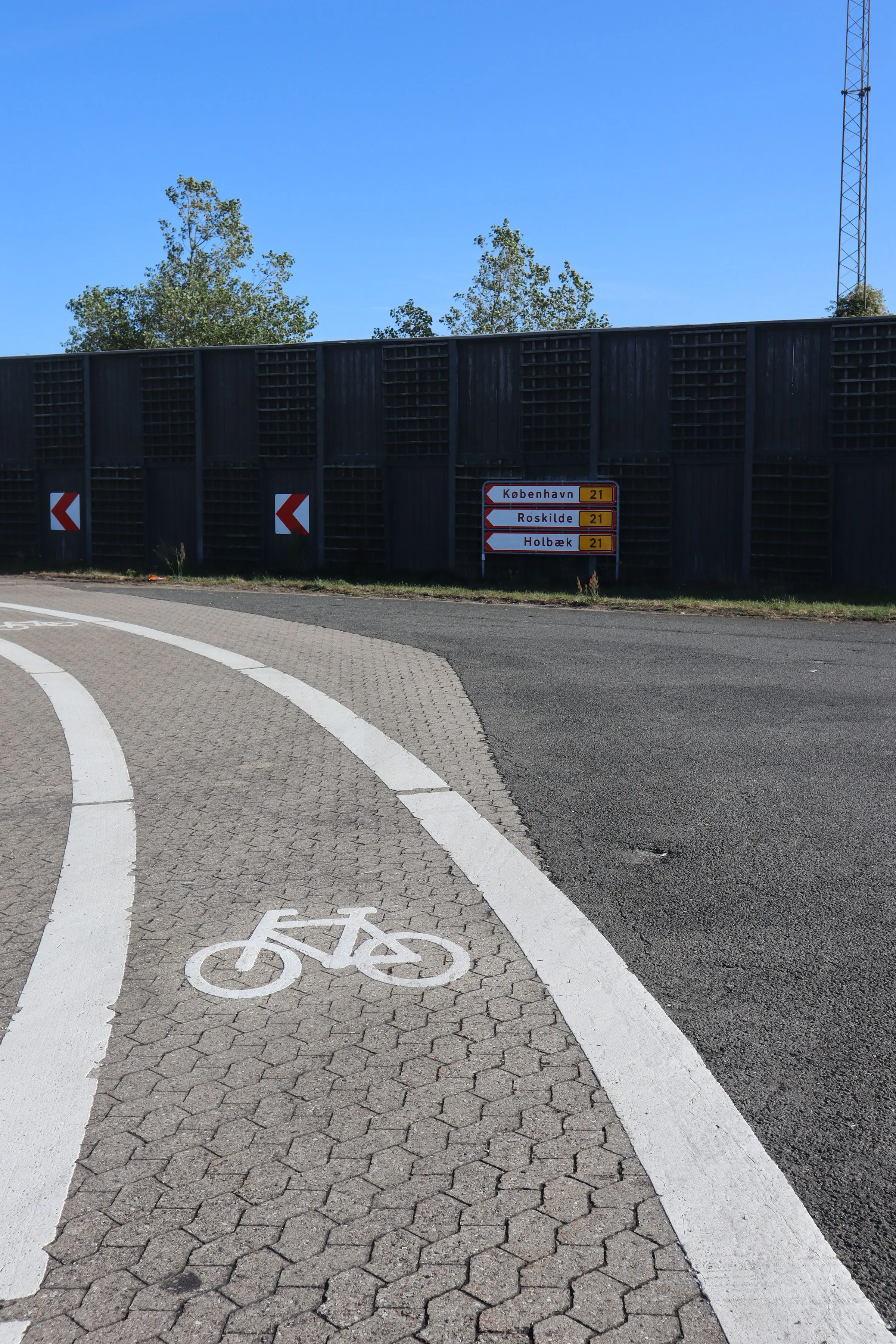
Everything about crossing by bike and what foot passengers need to know
From ramp to road
By car
A car crossing from Aarhus, timed from the scheduled departure. The times are what to plan around, not a guarantee.
- T-60
Leave the city
The terminal is in Østhavnen, outside the centre and about 20 min from the E45. It is signposted, but it is not where a first-time visitor expects a ferry port to be.
- T-30
Check in
Both ports read number plates automatically, so there is nothing to hand over if you booked online. Holiday traffic can stretch this window by 10 or 15 min.
- T-15
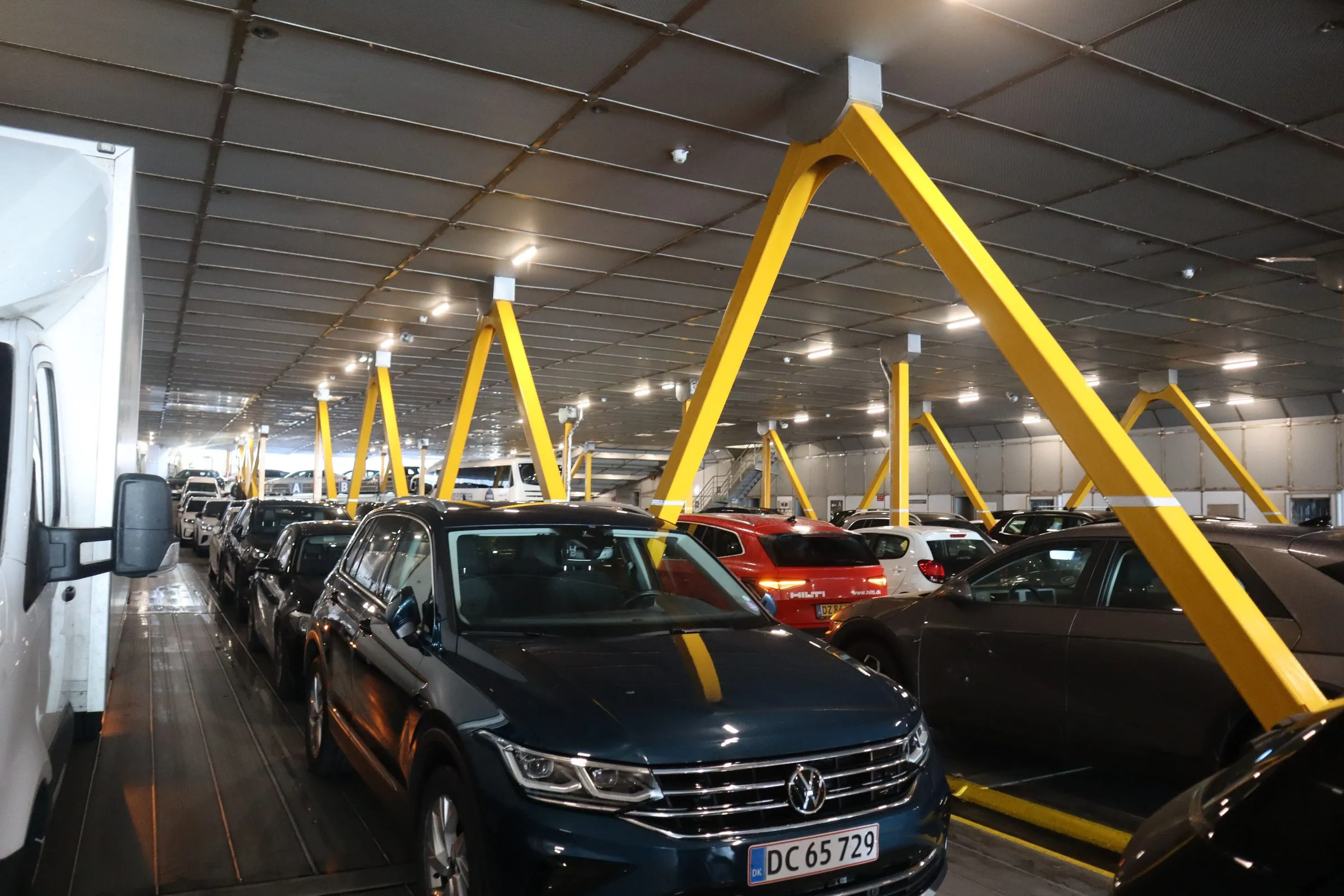
Onto the car deck
Loading is quick and closely marshalled. Which deck you are sent to follows from the height category you booked, from Car up to 1.85 m to a camper or a roof box ends up.
- 0:00
Departure
Leave the car and go up. Two staircases and a lift lead to the passenger decks; the lift matters if you are travelling with a pram or a wheelchair.
- 0:10
Pick your seat early
Free seating fills from the windows inwards. Tables for four go first. Reserved seating and the Business Lounge are separate.
- 1:20
People start moving
About 10 min before arrival, passengers get up and head for the stairs. There is no need to join them yet.
- 1:30
Odden, and off
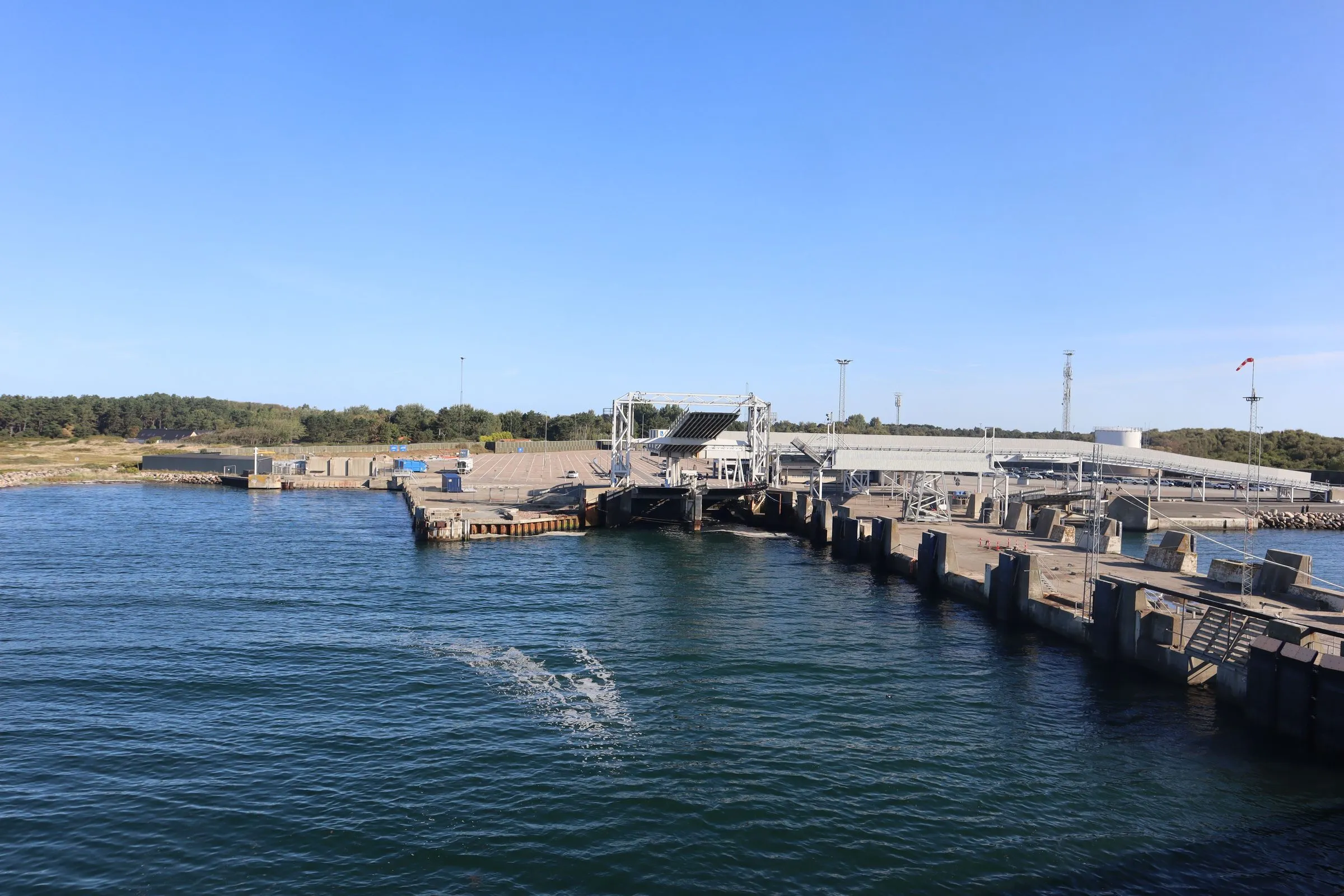
Unloading is run by the crew, row by row. Route 21 starts at the harbour gate and runs straight across Zealand.
Odden and Havnebyen
Aarhus is Denmark’s second city. Odden is a harbour on a spit of land, and the arrival is nothing like the departure. Route 21 starts right behind the terminal, and the village, Havnebyen, lies a short way along the coast.
Odden port covers the arrival itself, and what there is around Odden covers the peninsula, from Havnebyen to the ridge at Hulbjerg.
Plan your Aarhus–Odden crossing
- Ferry or bridge, if you have not decided yet
- Timetable, for the sailings and the busy windows
- Prices, for what a car, a camper and a foot passenger pay
- Aarhus port and Odden port, for check-in, parking and the walk aboard
- By bike and foot passengers, for the route without a car
- On board, for the three ships and what is on them
- Copenhagen to Aarhus, for that specific journey
- Ebeltoft to Odden, for the seasonal alternative
Questions people ask
How long does the Aarhus to Odden ferry take?
Between 80 and 90 min. Molslinjen's own route page gives both figures, and the technical specification for Express 2 says about 90 min. Plan for 90 and treat anything faster as a bonus.
Is the ferry faster than the Great Belt Bridge to Copenhagen?
Usually not. Door to door, Aarhus to central Copenhagen is roughly 302 km and about 3 hrs 20 min over the bridge. By ferry you add 15 min to the terminal, a check-in window, 90 min at sea and about 90 min from Odden, which lands at about 3 hrs 45 min.
Can I take a bicycle on the Aarhus to Odden ferry?
Yes, and it is free. In Aarhus you report to the ticket office and staff direct you aboard via the vehicle deck. From Odden and Ebeltoft you need to reserve a bicycle space in advance and check in at the vehicle machines.
How do I reach the ferry terminal in Aarhus without a car?
No city bus serves the terminal. You get there by the Kombardo Expressen coach from Aarhus bus station, by Flextrafik which you book in advance, or in a GreenMobility shared car that you may leave at the ferry.
Which ships sail this route?
Three high-speed catamarans: Express 2, Express 3 and Express 4. Express 2 is 112.6 metres long, was built by Incat in Tasmania and does up to 40 knots.